

Non-Fatal Strangulation
Non-fatal strangulation is when someone restricts another person’s oxygen or blood flow to the brain without killing them, usually by squeezing the neck or blocking the nose and mouth. This can include using hands, an arm, a leg, or an object. It can also happen when someone pushes a person against a wall or floor, grabs their throat, or covers their face so they can’t get air.
Even though the person survives, non-fatal strangulation is extremely dangerous. It can cause serious internal injuries that aren’t always visible on the outside. Many victims appear “fine” right after it happens, but inside, oxygen has been cut off from the brain, sometimes for long enough to cause lasting harm.
What Happens During Non-Fatal Strangulation
When pressure is applied to the neck:
- Blood flow to the brain is reduced or stopped—this can cause dizziness, confusion, tunnel vision, or loss of consciousness.
- The airway is compressed, making it hard or impossible to breathe.
- The vagus nerve can be stimulated, which can slow the heart rate and potentially cause loss of consciousness within seconds.
Because the brain relies on a constant supply of oxygen, even a small amount of pressure for a short time can create serious medical issues - even if there aren't any visible injuries.
Symptoms
Click through below for some of the potential symptoms after a Non-Fatal Strangulation

Difficulty Breathing
After a non-fatal strangulation incident, breathing can be difficult because pressure to the neck can damage the airway, blood vessels, and surrounding soft tissues. This can lead to internal swelling, bruising, or muscle injury that may not be visible but can narrow the airway and make breathing feel labored or tight.
These injuries can worsen over time, making breathing feel strained or unsafe hours or even days after the incident. This is why medical attention is advised after a non-fatal strangulation.

Sore Throat
After a non-fatal strangulation incident, a sore throat can occur because the pressure applied to the neck can injure the throat, larynx (voice box), and surrounding muscles and tissues. Even if there are no visible marks, the force can cause internal bruising, swelling, or small tears that lead to pain, tenderness, or a scratchy sensation when swallowing or speaking.
Inflammation may increase over time, which is why throat pain after strangulation should be taken seriously and medically assessed.

Headache
After a non-fatal strangulation incident, a headache can occur because pressure to the neck restricts blood flow and oxygen to the brain. This lack of oxygen, even briefly, can cause brain swelling, vascular injury, or changes in blood pressure that trigger head pain. Strangulation can also strain neck muscles and blood vessels, contributing to tension or migraine-like headaches.
Headaches after strangulation may be a sign of serious internal injury and should be medically evaluated, even if no external injuries are visible.

Vision Changes
After a non-fatal strangulation incident, vision changes can occur because pressure to the neck restricts blood flow and oxygen to the brain and eyes. Even brief oxygen deprivation can affect the visual centers of the brain, leading to symptoms such as blurred vision, tunnel vision, flashing lights, spots, or temporary vision loss.
Strangulation can also increase pressure in the blood vessels of the eyes, causing tiny vessels to rupture or swell, which may interfere with normal vision. These changes can appear immediately or develop hours or days later and may signal a serious neurological or vascular injury. Any vision changes after strangulation should be treated as a medical emergency and evaluated promptly.
Visible Injuries
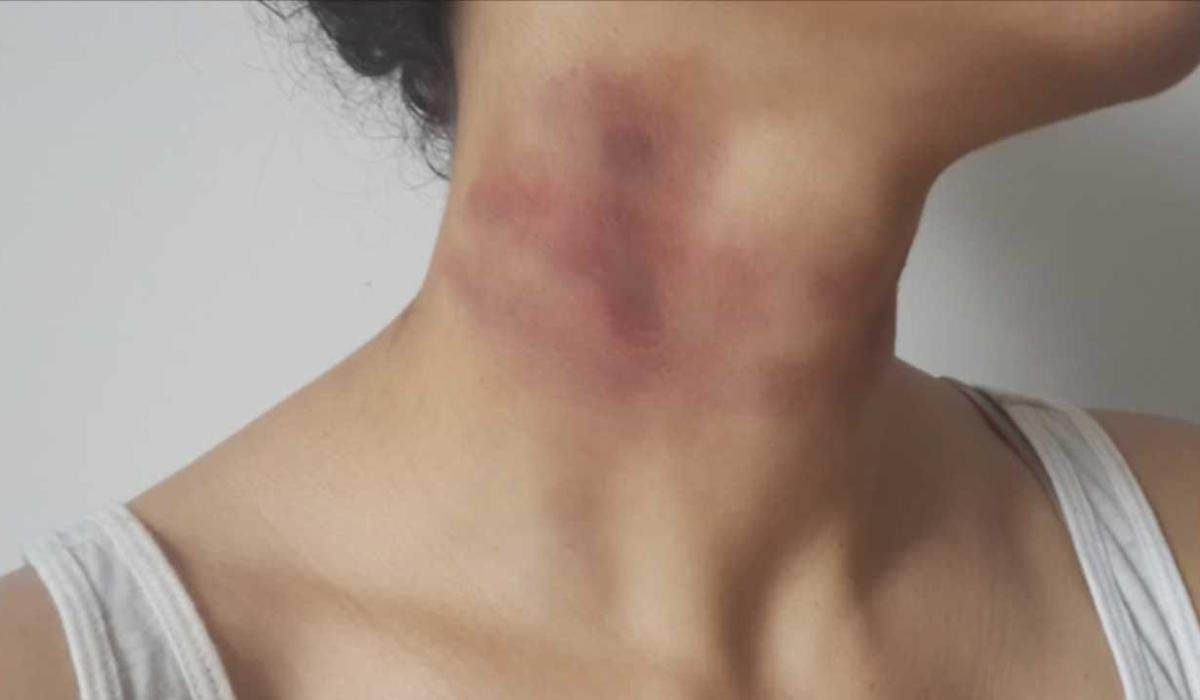
After a non-fatal strangulation incident, visible injuries may appear because the force applied to the neck can damage the skin, muscles, and blood vessels near the surface. This can cause bruising, redness, scratches, swelling, or marks shaped like fingers or hands.
Strangulation can also rupture small blood vessels, leading to pinpoint red or purple spots (petechiae) on the face, eyes, neck, or inside your mouth. These injuries may not appear right away and can become more noticeable hours or days later. Even when visible injuries seem minor, they may indicate serious internal damage and should be medically evaluated.
Lethality Indicator
Non-Fatal Strangulation is a key indicator of a highly lethal situation. Victims of Non-Fatal Strangulation are 750% more likely to be killed by their partner.
Choking vs Strangulation
Choking may be the more common term but choking actually means an internal blockage of the airway (like a person choking while eating). Strangulation is external pressure applied to block oxygen flow to the brain.
Delayed Symptoms or Even Death
Symptoms can occur hours to days after a Non-Fatal Strangulation. Internal swelling can worsen over time. Additionally the trauma from the strangulation can lead to serious vascular injuries causing stroke, brain damage, or even Death.
Injuries are often Not Visible
In over 50% of Non-Fatal Strangulations injuries are not visible. However even without bruising or redness, internal injuries can still pose an immediate health risk.
Difficulty Detailing Strangulation
The part of the brain responsible for memory is especially sensitive to a lack of oxygen making it hard to recall and incident. Also, trauma can impact memory as our brain may block negative experiences in order to protect ourselves.
Often Not Reported
Non-fatal strangulation is often underreported due to the lack of visible injuries, which can lead victims to minimize the seriousness of the assault. Limited public education about the significant medical dangers associated with non-fatal strangulation further increases the likelihood that incidents go unreported.
If you are currently in danger please contact 911
If you have experienced a Non-Fatal Strangulation we encourage you to seek medical attention, the assistance of law enforcement and connect with advocacy services.