


What is Coercive Control?
Coercive control is a pattern of behaviors someone uses to gain power over another person and limit their freedom.
Instead of relying on physical violence, the person uses manipulation, threats, isolation, and intimidation to make their partner feel scared, dependent, or unable to make their own choices.
It’s about
control, not conflict, and it often grows slowly over time, making the person being controlled feel like they’re “walking on eggshells.”
Coercive control can happen in any relationship—dating, married, same-sex, teen, or adult—and is often a warning sign that the relationship may become more dangerous.
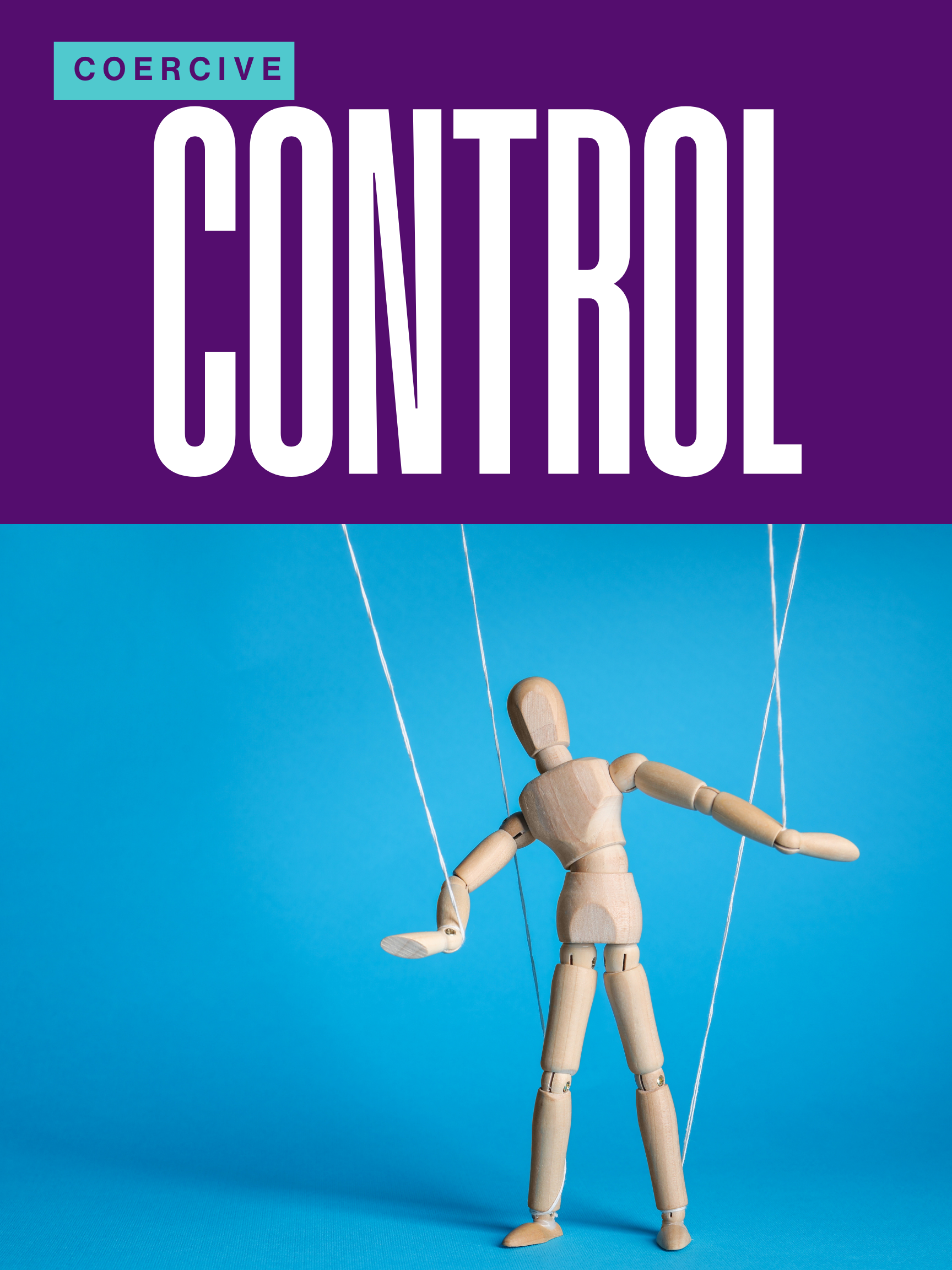
What can Coercive Control look like?
1. Isolation
A partner slowly pulls you away from your friends, family, or activities.
- “Your friends don’t really care about you.”
- “I don’t want you seeing them anymore—they’re a bad influence.”
- They get angry whenever you spend time with anyone else.
2. Monitoring or Excessive ‘Checking In’
They constantly want to know where you are, who you're with, or what you're doing.
- Requiring constant texting or FaceTiming
- Using location sharing to track them
- Going through your phone or social media without permission
3. Financial Control
They limit access to money or make all financial decisions.
- Not “allowing” you to work
- Taking your paycheck
- Making you ask for money for basic things
4. Emotional Manipulation
They twist things around to make you doubt yourself.
- Saying things like “You’re crazy,” “You’re overreacting,” or “No one else would put up with you.”
- Blaming you for the abuser’s anger or behavior
- Making you feel guilty for setting boundaries
5. Rules and Punishments
The abuser sets strict expectations and reacts with anger, silent treatment, or threats when they aren’t met.
- “You didn’t answer fast enough.”
- “You’re not allowed to wear that.”
- “If you leave me, I’ll hurt myself.”
Why it Matters
Coercive control can be just as harmful as physical violence and often leads to more dangerous situations. People living under coercive control often feel trapped, confused, or scared to make decisions for themselves.